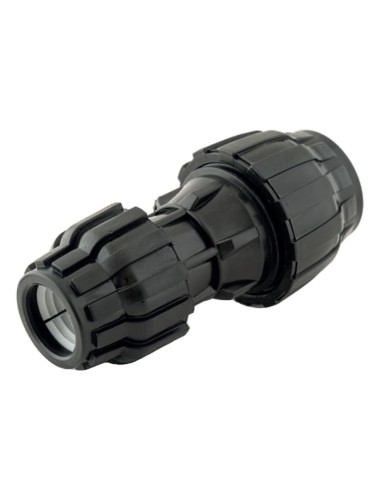
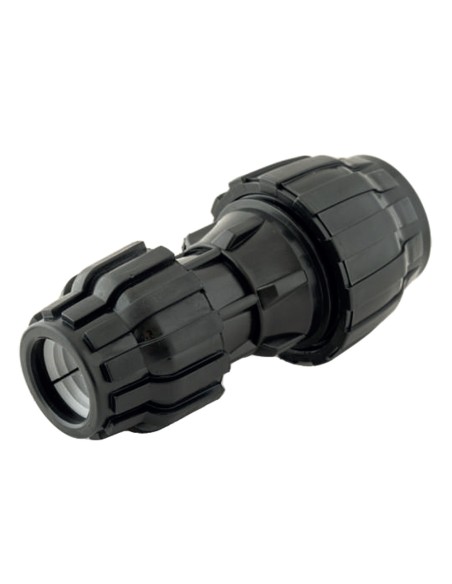
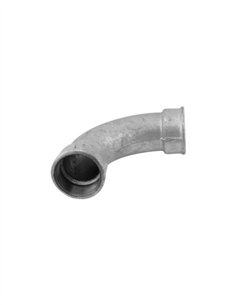
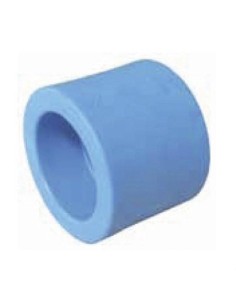
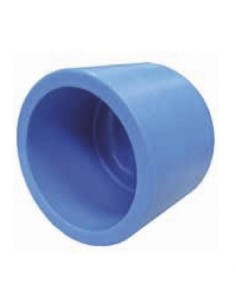
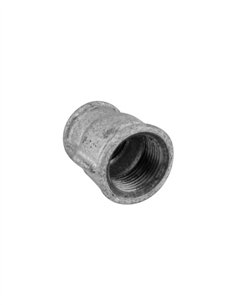
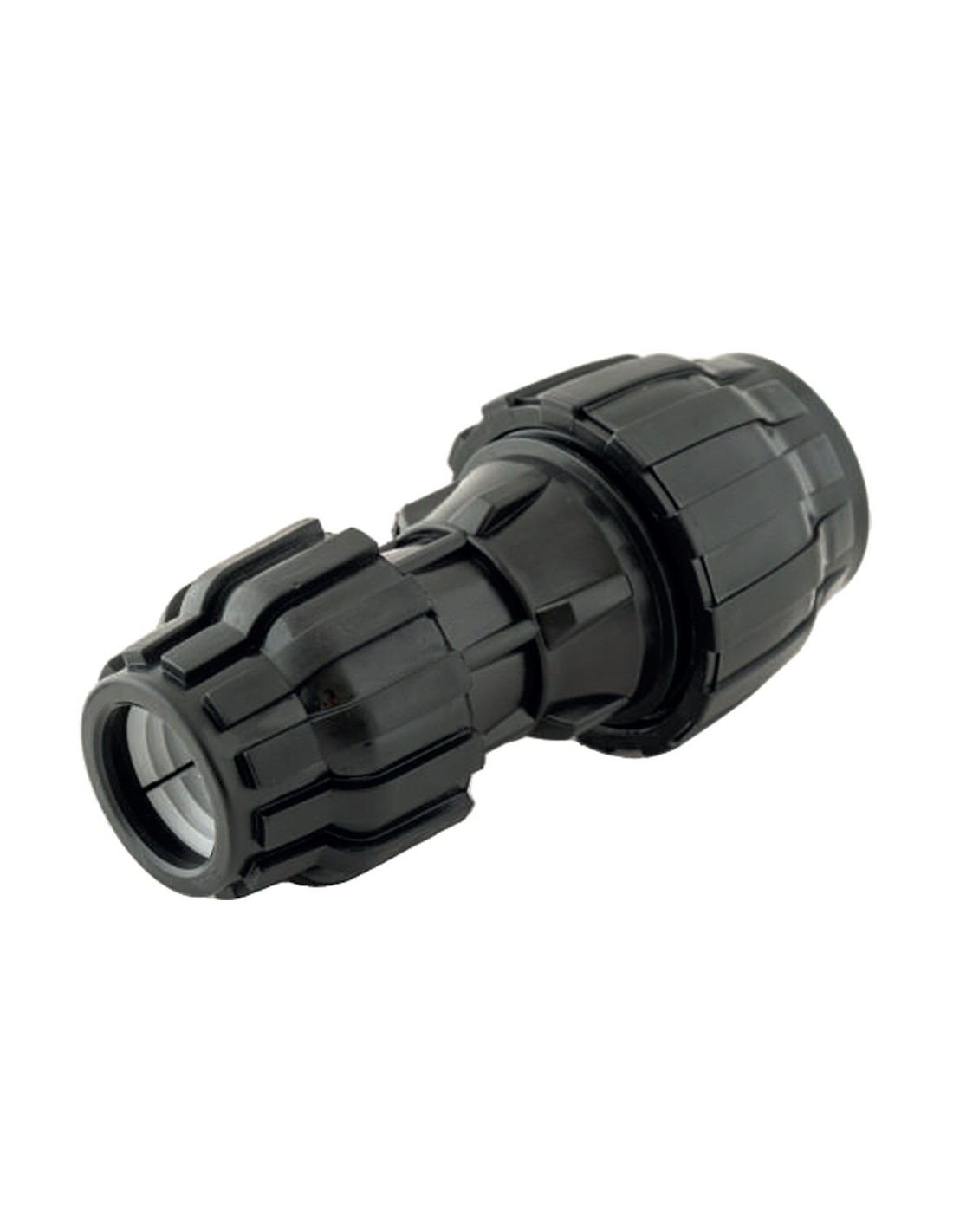
The Reduced Fitting Link Ø 25 - 20 mm is a fundamental accessory for connecting polyethylene pipes in agricultural irrigation systems. This product is specifically designed to facilitate the joining of pipes with different diameters, allowing for an efficient transition between 25 mm and 20 mm pipes. Made from polyethylene, a material known for its corrosion resistance and durability, this fitting is ideal for agricultural environments where exposure to various elements can be a critical factor. Its compact and functional design ensures that the integrity of the piping system is maintained, preventing leaks and guaranteeing a continuous flow of water.
Technical Features
- Inlet diameter: 25 mm
- Outlet diameter: 20 mm
- Total length: 129 mm
- Material: Polyethylene
- Pressure resistance: 12.9 bar
- Temperature resistance: up to 60°C
Among the benefits of using the Reduced Fitting Link is its ability to adapt to different pipe configurations, allowing installers to make modifications to the system without the need to replace entire sections. Additionally, its manufacture in polyethylene ensures a long lifespan, reducing the need for frequent maintenance and associated costs. This fitting is also lightweight, making it easy to transport and install, allowing agricultural professionals to work more efficiently.
The applications of this fitting are diverse, being especially useful in drip irrigation systems, where precision in water distribution is crucial. It can also be used in drinking water installations and drainage systems, where a secure connection between pipes of different diameters is required. Its versatility makes it an essential component for any agricultural project looking to optimize water use and improve irrigation efficiency.
Regarding installation, the Reduced Fitting Link Ø 25 - 20 mm can be easily placed on existing pipes, using standard tools to ensure a proper fit. It is recommended to check the alignment of the pipes before installation to ensure effective sealing. Maintenance is minimal, although periodic inspections are suggested to detect any signs of wear or damage, thus ensuring optimal performance over time.